
PHYSICAL RECOVERY AND COMPETITIVE READINESS
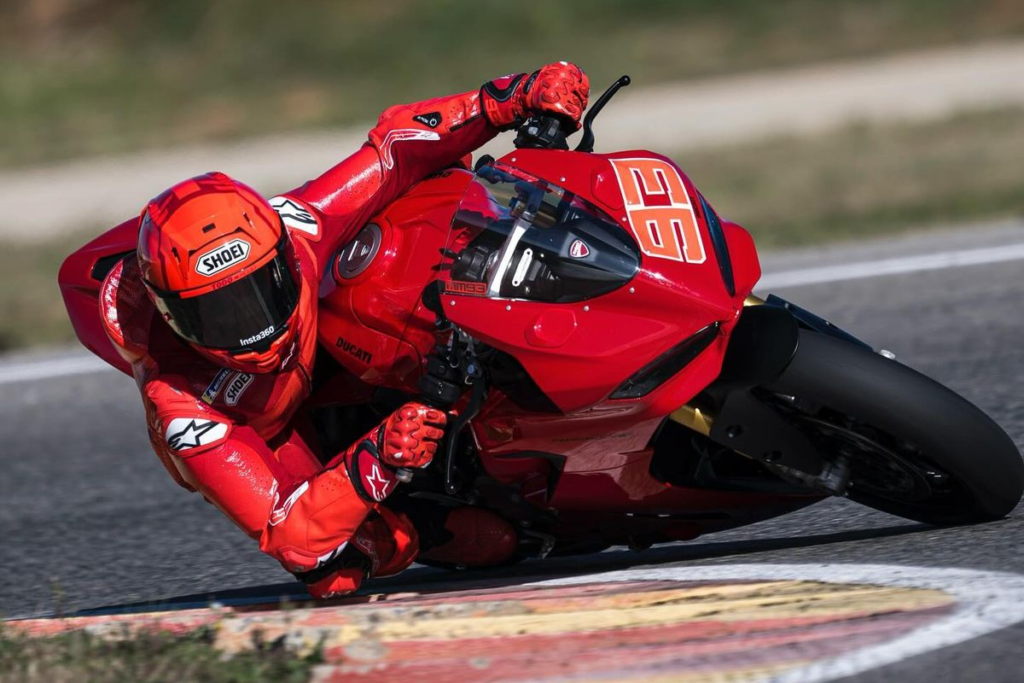
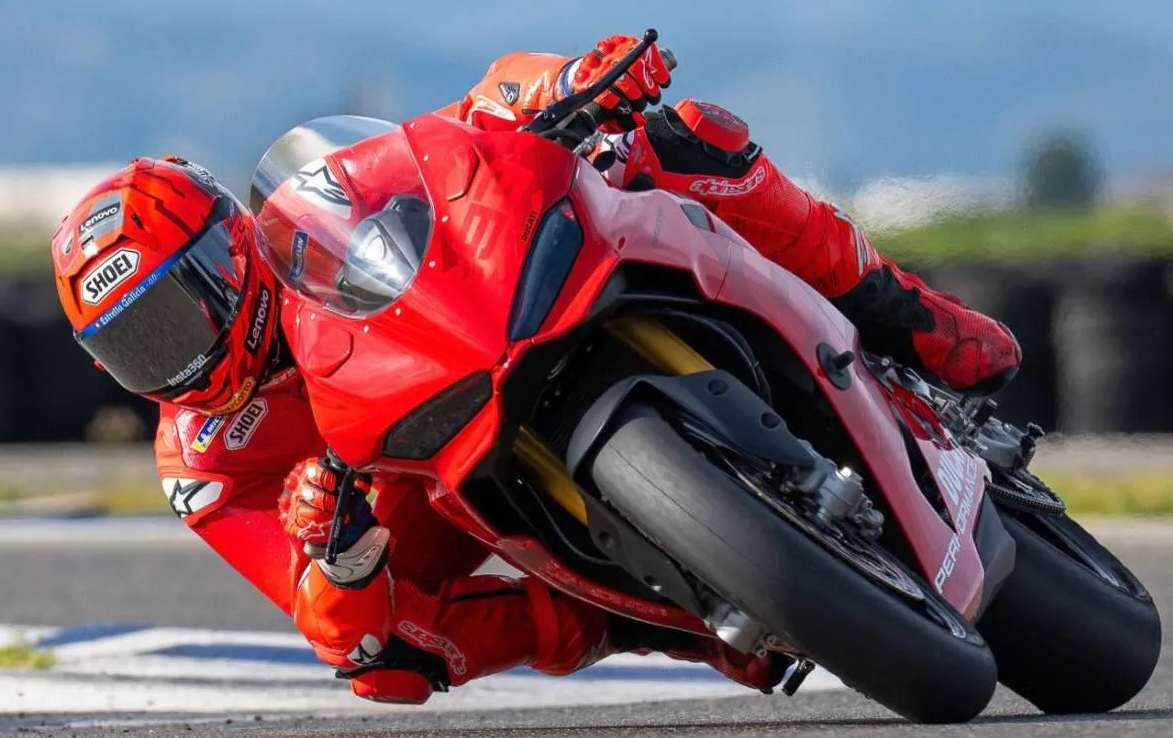
Nearly one hundred days removed from the physical isolation of rehabilitation, Marc Marquez’s return to a motorcycle in January 2026 marked far more than a simple test session. It represented a carefully timed transition—from medical recovery to competitive reconstruction—at a moment when MotoGP 2026 is quietly beginning to take shape. The seven-time world champion and reigning MotoGP 2025 title holder reappeared on track during a private Ducati-supported test at Valencia’s Aspar Circuit on January 8, not to chase lap times, but to answer a more fundamental question: whether his body was once again capable of enduring elite-level racing stress.
This was not a comeback designed for headlines. Instead, it was an internal checkpoint, one focused on sensory feedback, endurance, and neurological trust. For a rider whose career has been repeatedly interrupted by injury, the return to asphalt carried psychological weight equal to any physical milestone. The objective was simple yet demanding—validate the recovery under real conditions without provoking risk.
REBUILDING CONFIDENCE BEFORE PERFORMANCE
Marquez approached the session with restraint rarely associated with his aggressive reputation. There were no time attacks, no visible attempts to explore the limit. Every lap was used to recalibrate balance, refine body positioning, and confirm that reflexes and muscle response remained synchronized under braking and corner entry.
This phase of recovery was as much about mental clarity as it was about physical conditioning. The controlled environment allowed Marquez to measure fatigue patterns, joint response, and endurance without the pressure of competition. Only once these internal benchmarks are met can performance objectives safely return to the equation.
WHY VALENCIA WAS THE RIGHT CHOICE
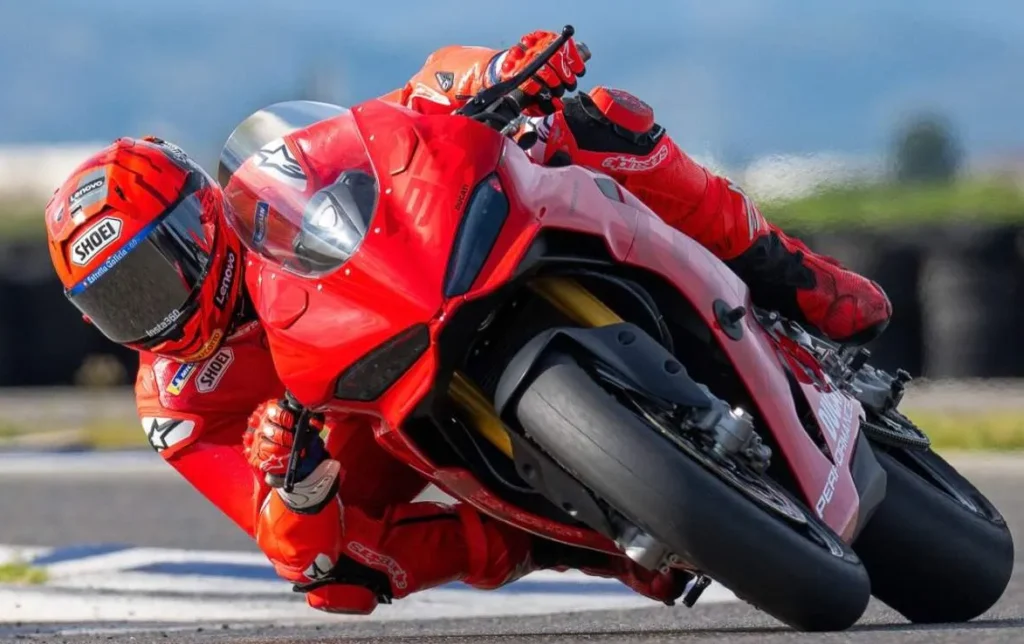
The decision to test at the Aspar Circuit was a deliberate strategic move. At just over 2.2 kilometers in length, the layout prioritizes rhythm and precision over outright speed. With 20 tightly linked corners and minimal straight-line exposure, the circuit minimizes sustained aerodynamic load and high-speed impact forces—key considerations for a rider re-entering competition after injury.
This configuration allowed Marquez and Ducati engineers to observe braking stability, corner-to-corner transitions, and physical adaptability under consistent load. Every technical section offered immediate feedback on mobility, flexibility, and joint confidence, making Valencia an ideal proving ground for post-rehabilitation evaluation.
A MEASURED MACHINE FOR A MEASURED RETURN
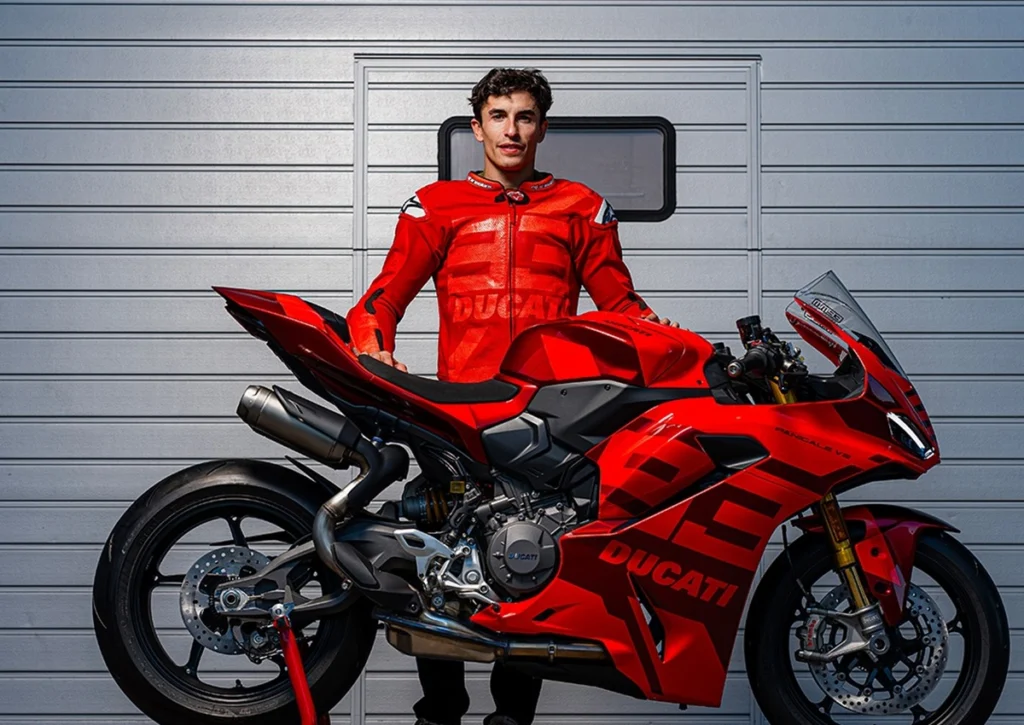
Equally significant was Marquez’s choice of machinery. Rather than opting for the more demanding Panigale V4S, he selected the Ducati Panigale V2—an intentional step toward mechanical predictability. The V-twin platform delivers smoother power delivery, reduced inertia, and more progressive torque characteristics, allowing the rider to prioritize control over aggression.
This choice underscored a disciplined mindset. The Panigale V2 enabled Marquez to reconnect with throttle modulation, braking feel, and corner flow without exposing his body to excessive stress. It was a reminder that elite performance begins with precision, not brute force—especially during a comeback phase.
DUCATI’S STRUCTURAL ADVANTAGE
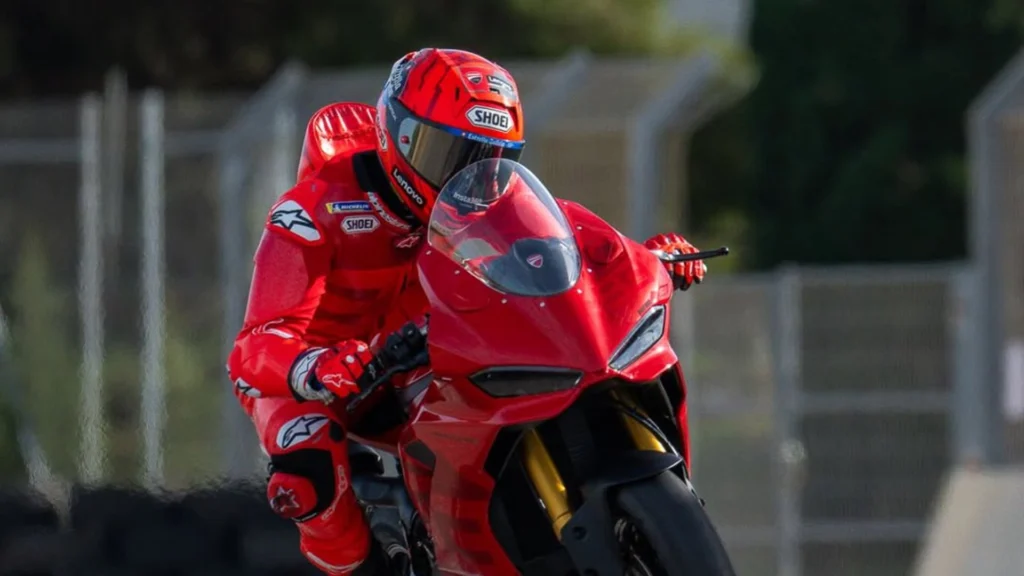
Beyond the physical aspect, Marquez’s return reinforced his confidence in Ducati’s competitive framework heading into MotoGP 2026. He remains openly convinced that Ducati continues to offer the most complete package in the paddock, combining performance depth, reliability, and a technical organization built for sustained dominance.
Central to that belief is his alignment with Ducati Corse General Manager Gigi Dall’Igna. Marquez has repeatedly highlighted Dall’Igna’s long-term vision and uncompromising pursuit of excellence, viewing the partnership as one built on shared intent rather than short-term results. For Marquez, Ducati represents not just machinery, but an ecosystem designed to maximize championship potential.
A SHARP CONTRAST IN FORTUNES
While Marquez’s return delivered optimism, the same day in Valencia served as a harsh reminder of MotoGP’s unforgiving nature. Young Gresini Ducati rider Fermin Aldeguer suffered a serious training accident while riding a Yamaha R6, resulting in a fractured left femur that required immediate surgery in Barcelona.
At just 20 years old and fresh from his first premier-class victory at the Indonesian Grand Prix, Aldeguer’s momentum has been abruptly interrupted. The incident highlighted how quickly opportunity can be replaced by uncertainty in a sport where preparation windows are narrow and unforgiving.
TIME: THE MOST RUTHLESS OPPONENT
With the MotoGP 2026 pre-season test scheduled for early February at Sepang, time now becomes the defining adversary—particularly for Aldeguer. Missing early testing can have cascading consequences, especially for younger riders still adapting to MotoGP machinery and technical complexity.
In contrast, Marquez’s situation demonstrates the advantage of experience and strategic patience. His return has been paced to protect long-term readiness rather than immediate visibility, emphasizing sustainability over urgency.
A GRID ALREADY TAKING SHAPE
As MotoGP 2026 edges closer, the championship narrative is already being written through moments like these. Carefully managed comebacks stand alongside sudden setbacks, shaping competitive trajectories before the first official lap is turned.
Marc Marquez’s Valencia test may have been quiet on the stopwatch, but it spoke loudly in intent. It signaled a rider who understands his limits, trusts his structure, and is methodically preparing for another title defense—while MotoGP continues to remind everyone that resilience, timing, and preparation remain the sport’s most decisive currencies.