
BAGNAIA’S BREAKING POINT MOTOGP 2026
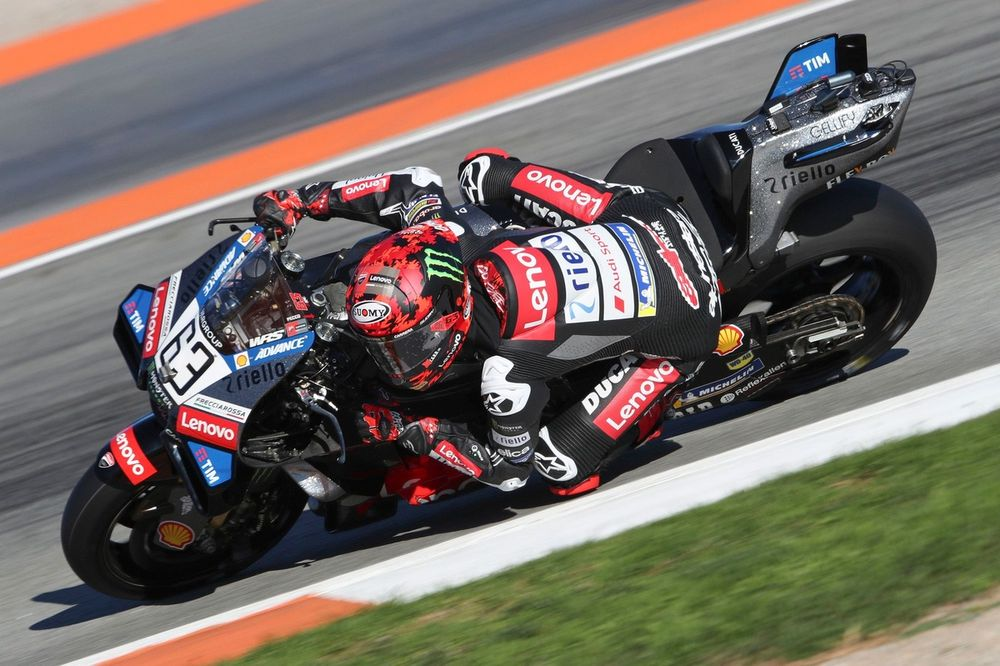
The 2025 MotoGP season did more than reshape the championship standings—it permanently altered Francesco Bagnaia’s place within Ducati and within himself. Sharing the Ducati Lenovo garage with a fully resurgent Marc Marquez proved to be less a partnership and more a psychological stress test. What was once expected to be a balanced internal rivalry quickly became a season defined by contrast, pressure, and an uncomfortable realization: consistency alone no longer wins championships in modern MotoGP.
LIVING BESIDE A BENCHMARK THAT NEVER BLINKS
Marc Marquez’s arrival at Ducati Lenovo instantly reset the internal hierarchy. From the opening rounds, his authority inside the garage was unmistakable. Lap after lap, session after session, Marquez delivered results that left no margin for interpretation. Eleven Grand Prix victories and fourteen sprint wins turned his debut Ducati season into a masterclass in domination. For Bagnaia, watching that level of control unfold from the other side of the same pit wall created a constant mental strain that no data sheet could quantify.
What made the situation more brutal was its intimacy. This was not a rival across the paddock—it was a teammate using the same machinery, the same engineers, and often the same track conditions. Every comparison became personal.
A CHAMPION REDUCED TO SURVIVAL MODE
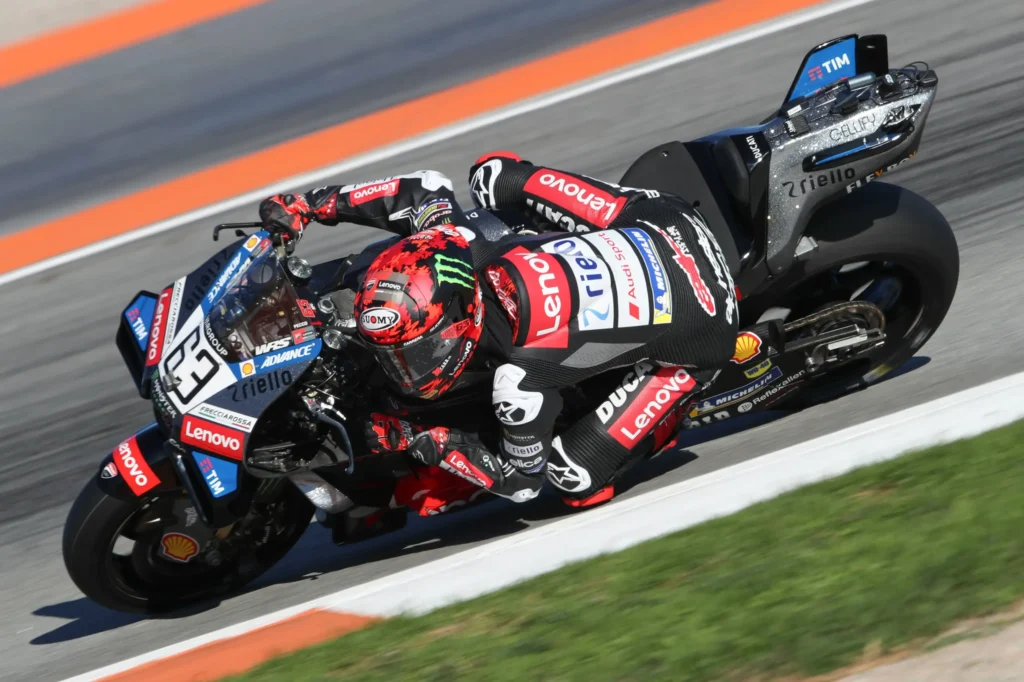
The statistical collapse was impossible to hide. Bagnaia finished the 2025 season with only two Grand Prix victories from twenty-two races, a staggering drop for a rider once considered Ducati’s long-term title anchor. As Marquez surged toward his seventh MotoGP world championship, Bagnaia slipped to fifth overall, failing to score points in eight of the final ten races.
Related Post
Behind the numbers was a deeper issue: confidence erosion. Bagnaia admitted that watching his teammate dominate while his own results deteriorated was mentally exhausting. Loyalty to Ducati remained intact, but belief—arguably the most important currency in MotoGP—was severely tested.
WHEN BRAKING CONFIDENCE DISAPPEARS, EVERYTHING FOLLOWS
Beyond the mental burden, Bagnaia identified a critical technical regression that defined his disastrous campaign. His greatest strength in previous seasons—aggressive braking while maintaining lean angle—vanished almost entirely. In 2024, he could slow the bike deep into corners, manage rear slip, and carry decisive entry speed. In 2025, that capability collapsed.
The problem intensified when riding in traffic. Turbulent airflow behind other bikes disrupted front-end feel, making corner entry unpredictable and dangerous. Without the ability to trust braking at lean, Bagnaia was forced to back out of fights he once controlled. In MotoGP, hesitation is a weakness others exploit instantly.
PROFESSIONAL RESPECT, RUTHLESS REALITY
Despite the imbalance, Bagnaia was careful to separate rivalry from personal conflict. Inside the Ducati Lenovo structure, professionalism prevailed. Both riders contributed to the Desmosedici’s development, and mutual respect prevented the garage from becoming toxic. Yet no amount of professionalism could disguise the truth: Marquez had become the reference point for Ducati’s present—and future.
In a team where results dictate hierarchy, this reality carries consequences far beyond a single season.
THE MEANING BEHIND “BETRAYAL”
As MotoGP 2026 approaches, a new narrative has emerged around Bagnaia—one defined by uncomfortable transformation. The phrase “Bagnaia must betray to become MotoGP 2026 world champion” is not about disloyalty to Ducati. It is about betrayal of self.
To defeat Marquez, Bagnaia must abandon the version of himself built on smoothness, rhythm, and calculated control. Marquez thrives where instability lives—pushing the front beyond comfort, embracing chaos as performance. Closing that gap demands that Bagnaia ride against instincts that once made him successful.
DUCATI’S ENGINEERING DILEMMA AND BAGNAIA’S LEAP OF FAITH
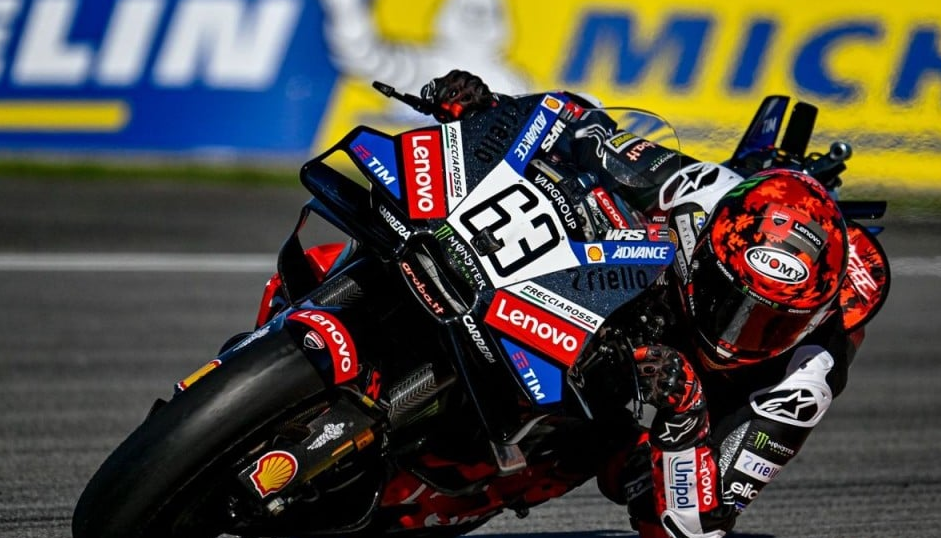
Ducati now faces a complex technical challenge: restoring Bagnaia’s corner-entry confidence without compromising the bike’s aggressive DNA that suits Marquez so perfectly. Engine braking strategies, aerodynamic load under deceleration, and front-end feedback have become critical development areas.
Yet technology alone will not solve the problem. Bagnaia must trust those changes blindly, even if early failures come at high cost. Confidence lost under braking cannot be recovered cautiously—it must be reclaimed violently.
A MENTAL RESET UNDER CONSTANT SURVEILLANCE
Rebuilding belief after a season like 2025 requires more than testing mileage. Every lap comparison, every data overlay, every debrief with Marquez standing nearby becomes a silent reminder of the benchmark. To survive, Bagnaia must mentally isolate himself, racing not against Marquez’s presence but against his own limitations.
This psychological separation may prove harder than any physical adaptation.
CAREER CONSEQUENCES BEYOND THE CHAMPIONSHIP
MotoGP 2026 is not just another title attempt—it is a referendum on Bagnaia’s future at Ducati. The manufacturer has never hidden its philosophy: performance defines priority. Should Bagnaia fail to reassert himself as a genuine title contender, questions about Ducati’s long-term leadership structure will inevitably surface. Younger, more aggressive riders are watching closely.
REINVENTION OR IRRELEVANCE
Ultimately, MotoGP 2026 represents a crossroads. Francesco Bagnaia can no longer rely on refinement alone in an era defined by relentless aggression. To reclaim the crown, he must betray comfort, betray predictability, and betray the champion he once was.
Only through total reinvention can Bagnaia escape Marc Marquez’s shadow—and prove that his legacy at Ducati is not already written.